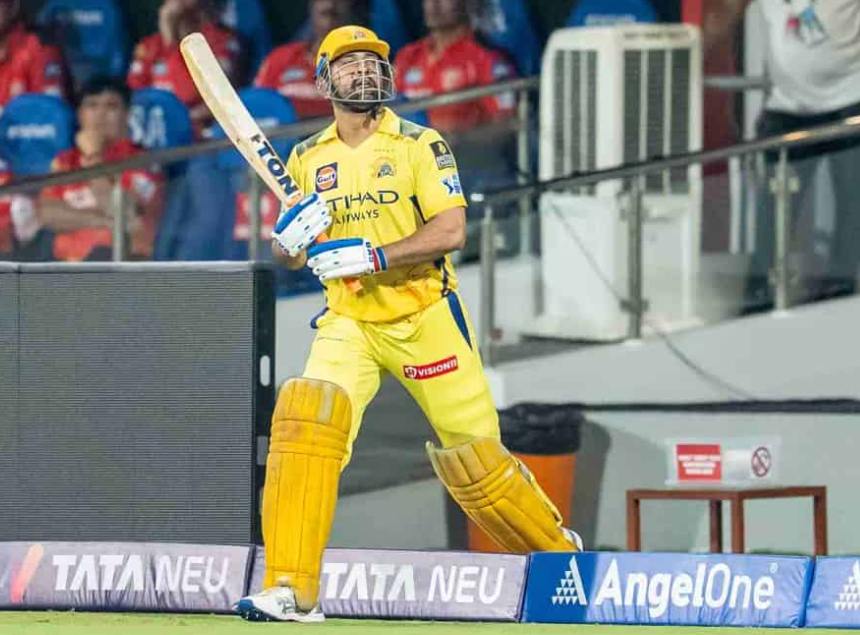
MS Dhoni has been one of the vital cogs of CSK’s history. The former CSK captain, who has played 278 games, scored 5439 runs at an average of 38.3 and a strike rate of 137.4, laced with 24 half-centuries. Under his captaincy, CSK won five IPL titles and two Champions League T20 titles.
Meanwhile, his role at Chennai Super Kings has entered a new phase. The excitement around him has not reduced, but the way the team uses him is slowly changing. This is not about form or ability. It is about managing a 44-year-old wicketkeeper through a long and demanding tournament.
For years, MS Dhoni played almost every game because the team needed him to. Now CSK have the option to think differently. That shift could become very visible in IPL 2026.
1. Fitness and workload management at 44 for MS Dhoni
The biggest factor is physical workload. Wicketkeeping in the IPL is not just about standing behind the stumps. It means squatting for 20 overs, staying alert on every ball, handling deflections, and then travelling to the next city within a short gap. Recovery becomes harder with age, even for someone as disciplined as Dhoni.
Over the past few seasons, he has played through knee and back issues. That commitment has helped CSK in crucial moments, but it also showed that his body needs careful handling. Playing every league match in a tight schedule does not help the player or the team.
A fresher Dhoni in key games is far more valuable than an overworked Dhoni in the early phase of the tournament. CSK understand this very well. Resting him in selected matches is not a sign of weakness. It is a practical decision to keep him sharp for the business end of the season.
READ MORE: T20 World Cup 2026: How to book tickets for the semi-finals and final?
2. Sanju Samson’s arrival gives CSK flexibility
For the first time in many years, CSK have a proper wicketkeeping replacement. Sanju Samson’s arrival changes the balance of the squad completely. He is experienced, confident, and capable of handling both the gloves and a major batting role.
This allows the team management to rest Dhoni without disturbing the playing combination. There is also depth beyond Samson. Urvil Patel is available as backup, and Kartik Sharma is being prepared as a long-term finisher. This means Dhoni no longer has to play every game just because there is no alternative.
This is actually a strong sign for CSK’s future. The team can now manage its biggest player smartly while giving opportunities to others. It also helps Ruturaj Gaikwad grow as a full-time leader in different match situations.
MS Dhoni’s influence does not disappear if he sits out a few games. His presence in the dressing room and near the dugout still shapes decisions during pressure moments.
3. The Impact Player rule has reduced his batting workload
The Impact Player rule has quietly changed Dhoni’s role over the last two seasons. He is no longer required to bat for long periods. His job is very specific, which is to come in late and finish the innings.
This short role suits him perfectly at this stage of his career. He does not need to spend 25 or 30 balls at the crease. He can walk in for the final overs, read the situation quickly and play with clarity because this kind of approach helps him save energy to keep him fresh for wicketkeeping duties.
CSK are likely to continue with the same method in IPL 2026. Instead of using him in every match, they can bring him in for games where his finishing and decision-making will have the biggest impact.