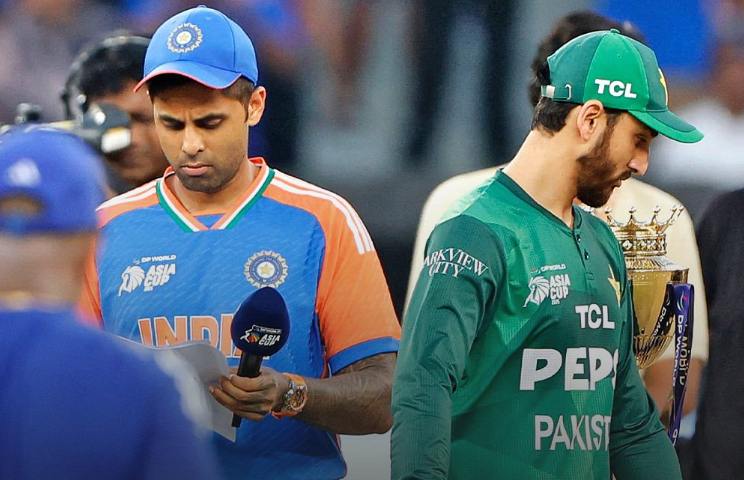
The International Cricket Council (ICC) has taken a strong and clear stand on Pakistan’s decision to boycott its T20 World Cup 2026 group-stage match against India. Pakistan has confirmed that it will take part in the tournament, but its refusal to play one particular match has caused serious concern. The move has raised questions about how global cricket events should be conducted in the future.
Pakistan announced that it will not take the field against India on February 15, even though both teams are placed in the same group. The ICC responded by making it clear that such selective participation cuts against the basic structure of international tournaments. In its official reaction, the governing body warned that the decision threatens the integrity of the sport and could have long-term consequences well beyond a single match.
ICC clarifies position after Pakistan signals boycott of India game
The ICC also revealed a critical detail: it has not received any official communication from the Pakistan Cricket Board regarding the boycott. That silence complicates the situation further. Decisions of this magnitude demand formal dialogue, especially when they affect scheduling, competition balance, broadcasters, sponsors, and millions of fans worldwide.
In its statement, the ICC did not shy away from addressing the political dimension behind the decision, while still defending cricket’s core principles.
“The ICC notes the statement that the government of Pakistan has made regarding the decision to instruct its national team to selectively participate in the ICC Men’s T20 World Cup 2026.”
The phrase “selectively participate” stands out. World Cups operate on equality of competition. Teams qualify, schedules are fixed, and every match carries sporting and commercial weight. Once a team opts out of a marquee fixture while continuing in the tournament, the entire framework begins to wobble.
The ICC reinforced this point clearly. “While the ICC awaits official communication from the Pakistan Cricket Board (PCB), this position of selective participation is difficult to reconcile with the fundamental premise of a global sporting event where all qualified teams are expected to compete on equal terms per the event schedule.”
This is more than procedural language. It is a warning. If one team can skip a match without immediate resolution, it opens the door for similar actions in future tournaments. Cricket risks drifting into a space where politics decide fixtures rather than performance.
The governing body went further, framing the issue around values rather than rules. “ICC tournaments are built on sporting integrity, competitiveness, consistency and fairness, and selective participation undermines the spirit and sanctity of the competitions.”
ALSO READ: Pakistan Confirms Participation in T20 World Cup, Will Skip India Match
That sentence captures the heart of the controversy. Integrity does not survive partial commitment. Fans do not tune in to watch walkovers or administrative outcomes. They come for contests, rivalries, and moments that define tournaments.
While acknowledging national sovereignty, the ICC made it clear that this decision serves no one in the long run.
“While the ICC respects the roles of governments in matters of national policy, this decision is not in the interest of the global game or the welfare of fans worldwide, including millions in Pakistan.”
That reference to Pakistani fans matters. The boycott does not punish opponents; it deprives supporters of one of cricket’s most anticipated encounters. It also places players in an impossible position—qualified, ready, yet unable to compete.
The ICC also highlighted the potential damage to Pakistan’s own standing within the cricketing ecosystem.
“The ICC hopes that the PCB will consider the significant and long-term implications for cricket in its own country as this is likely to impact the global cricket ecosystem, which it is itself a member and beneficiary of.”
From a competitive angle, the consequences are immediate. Pakistan share Group A with India, Namibia, Netherlands, and the USA. All their matches take place in Sri Lanka, a neutral venue. A boycott would result in a two-point forfeit, severely denting qualification chances. Worse, ICC playing conditions state that forfeits negatively affect net run rate, effectively treating the abandoned match as a full-overs loss.
Clause 16.10.7 ensures that such penalties are not symbolic—they materially alter tournament outcomes.
Finally, the ICC reiterated its core objective. “The ICC’s priority remains the successful delivery of the ICC Men’s T20 World Cup which should also be the responsibility of all its members including the PCB. It expects the PCB to explore a mutually acceptable resolution, which protects the interests of all stakeholders.”