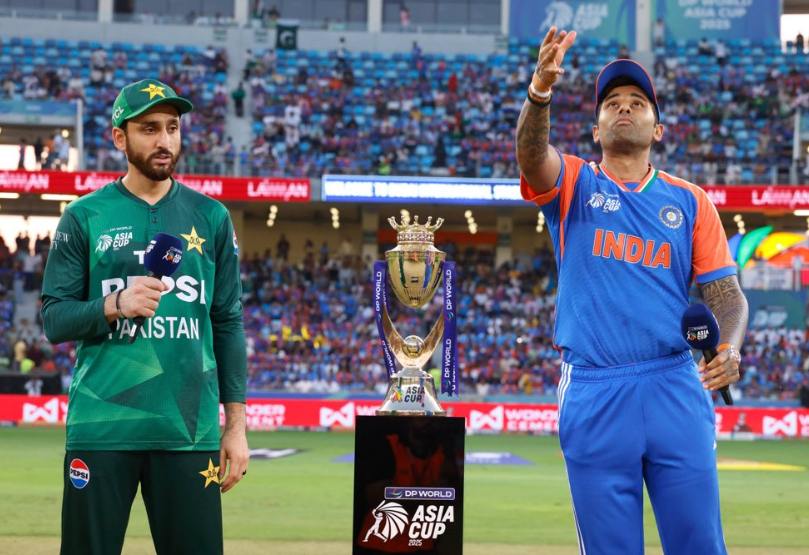
Pakistan’s decision to boycott its group-stage match against India has created uncertainty around one of the tournament’s biggest fixtures. The issue has once again shown how quickly cricket can get pulled into political territory.
The India vs. Pakistan match is scheduled to be played in Colombo, Sri Lanka. The venue is neutral. The conditions are standard. Still, Pakistan made up their mind that they would not take the field against Team India while continuing to play the rest of the tourney. This selective decision raised questions about commitment and fairness.
Meanwhile, many fans expected immediate responses from cricket boards. Others wanted clarity from the authorities. Amid all this, the Board of Control for Cricket in India chose not to escalate the situation.
BCCI Leaves Boycott Decision to ICC as T20 World Cup Controversy Grows
BCCI Vice-President Rajeev Shukla addressed the matter and clearly explained India’s position. “We will follow whatever decision is taken by ICC… BCCI has no statement on this…”
That statement summed up India’s approach. The BCCI made it clear that it would not act on its own or turn the issue into a bilateral dispute. Instead, it placed responsibility on the International Cricket Council, which governs the tournament.
BCCI Vice President, Rajeev Shukla, has made India’s stance clear on Pakistan’s T20 World Cup boycott: “I have made it absolutely clear that we will go along with whatever decision the ICC takes. There is no separate statement from the BCCI on this matter. Whatever the ICC decides, we will accept.”
The boycott issue has deeper roots. Before Pakistan’s announcement, Bangladesh raised concerns related to security and match arrangements. When the ICC refused to shift all their matches away from India, Bangladesh withdrew from the tournament. Pakistan later stated that it would support Bangladesh by refusing to play India.
ALSO WATCH: Nepal Acknowledge Wankhede Crowd with Lap of Honour After Close England Loss
This sequence of events created a difficult scenario for the ICC. A World Cup relies on full participation. When one team decides not to play a specific opponent, it disrupts scheduling, broadcasting plans, and competitive balance.
India’s response remained consistent throughout this period. The BCCI did not accuse any board. It did not issue warnings or counter-statements. It did not politicize the issue in public. That restraint helped keep the matter within official channels.
Some fans questioned this silence. They expected stronger words. However, the BCCI understands that loud statements rarely lead to solutions. The ICC must also manage relations with member boards at the same time. Balancing governance and diplomacy is never easy. Whatever decision the ICC takes will influence how international cricket handles similar situations going forward.
From India’s side, the message is simple. The team is ready to play. The board is ready to follow instructions. There is no intention to turn cricket into a political argument. The BCCI’s stance sends a clear signal. Cricket must operate within its system. Decisions must come from the ICC. Individual boards should not decide fixtures based on external pressures.
As the tournament approaches, attention will remain on the ICC’s next move. The governing body must protect the credibility of the World Cup while ensuring fairness to all teams. For now, India has chosen stability over noise. It has chosen patience over provocation. And it has made it clear that cricket should stay focused on the field.
Fans can only hope that the issue finds resolution soon. The game deserves clarity. The tournament deserves integrity. And cricket deserves to remain bigger than the disputes surrounding it.