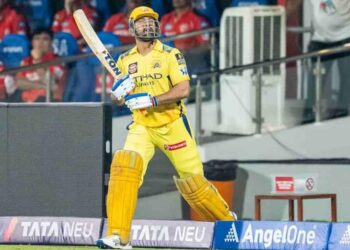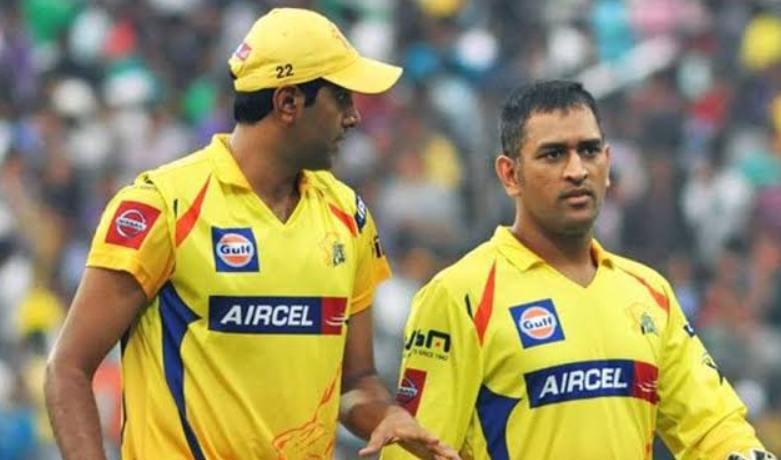
The Chennai Super Kings have always thrived on the “Thala” factor. Even as the IPL evolves, MS Dhoni remains the axis around which the franchise turns. As the 2026 season draws closer, the conversation around Dhoni has clearly changed.
Despite being 44, Dhoni’s recent return to the practice nets in Ranchi has stirred excitement. Videos of him batting with intensity spread quickly. But what truly grabbed attention came not from visuals, but from words. Ravichandran Ashwin, Dhoni’s longtime teammate and one of India’s sharpest cricketing minds, dropped a tactical bombshell about the latter’s new batting role for CSK in IPL 2026.
Ravichandran Ashwin hints at Dhoni‘s new batting role
According to Ashwin, MS Dhoni may no longer operate as Chennai Super Kings’ late-innings finisher. Instead, the CSK icon could walk in as early as No. 3 during the Powerplay in IPL 2026. The suggestion feels bold, but not reckless.
Dhoni has built his IPL legacy as the calm closer. He absorbed pressure at the death and finished games with ruthless efficiency. But the modern T20 game now rewards early dominance. Teams chase Powerplay advantage relentlessly. Ashwin believes Dhoni understands this shift and wants to adapt rather than fade.
Ashwin, who ended his IPL career after a final season with CSK in 2025, linked Dhoni’s plans to both fitness and intent. He pointed out that Dhoni’s training patterns and body language indicate a bigger role, not a symbolic one.
“Dhoni looks set to play as he has already started practising. He’s looking fit. Some said he may not play in the 11, or this might be his last season. But it looks like he got motivated seeing Imran Tahir. Looking at him, it doesn’t look like he’ll bat at No.9. He looks like he’ll come out to bat at No.3 in the Powerplay and be the enforcer, the way he has begun practice,” Ashwin stated on his YouTube channel.
Ashwin’s reference to Imran Tahir matters. Tahir extended his career through discipline, fitness, and clarity of role. Dhoni appears to follow a similar path.
Why this move makes sense for CSK
This possible shift also solves a tactical problem for Chennai Super Kings. The 2025 season exposed cracks in their structure. CSK finished at the bottom of the table. Their batting lacked momentum at the top. Dhoni, by his own lofty standards, had a quiet campaign.
He scored 196 runs at a strike rate of 135.17. Those numbers did not hurt the team, but they did not lift it either. By batting higher, Dhoni can control the tempo without the pressure of soaring required rates. He can rotate strike, punish loose balls, and allow younger hitters to attack freely.
At No. 3, Dhoni would face fielding restrictions. He would not need to manufacture shots immediately. His game awareness could steady innings that wobble early. For CSK, that stability could prove priceless.
ALSO READ: From Yuvraj Singh to Abhishek Sharma: Five Batters with the Fastest T20I Fifties
Ravi Ashwin sees a transformed CSK batting unit
While Dhoni remains the focal point, Ashwin believes Chennai Super Kings have quietly rebuilt their batting core. He described the squad as deeper, bolder, and far more intimidating than before.
The signing of Sanju Samson stands out because he brings intent, experience, and flexibility. He strengthens the middle order and complements Ruturaj Gaikwad at the top and it will be interesting to see how this combination goes. Ashwin believes this pairing lays a strong foundation.
Behind them sits firepower. Dewald Brevis adds unpredictability. Shivam Dube continues to provide clean hitting against spin. Young talents Ayush Mhatre and Prashant Veer represent the future and bring fearless energy.
Ashwin also highlighted the importance of lower-order muscle. Jamie Overton adds late-innings acceleration. Ayush Mhatre, in particular, has impressed Ashwin with his domestic consistency and confidence.
“Even 220 becomes really difficult for teams to stop CSK,” Ashwin added on his YouTube channel, emphasizing that the sheer volume of boundary-hitters in this squad is unprecedented.
If Dhoni bats at No. 3 in IPL 2026, it will mark one of the most radical shifts of his career. It will also underline why he remains relevant after two decades at the top. Dhoni has never chased comfort. He has always chased control.